Step Beyond the Classroom: Medicine • Global Health • Service • Leadership
| A Real-World Experience In spring 2027, Medicine Connect (MC) will again organize youth participation in Africa Cries Out (ACO) medical and community service programs in Senegal, West Africa. This is more than a trip and more than simple shadowing—it is an opportunity to learn medicine, global health, service, project development, and leadership in a real-world setting. |
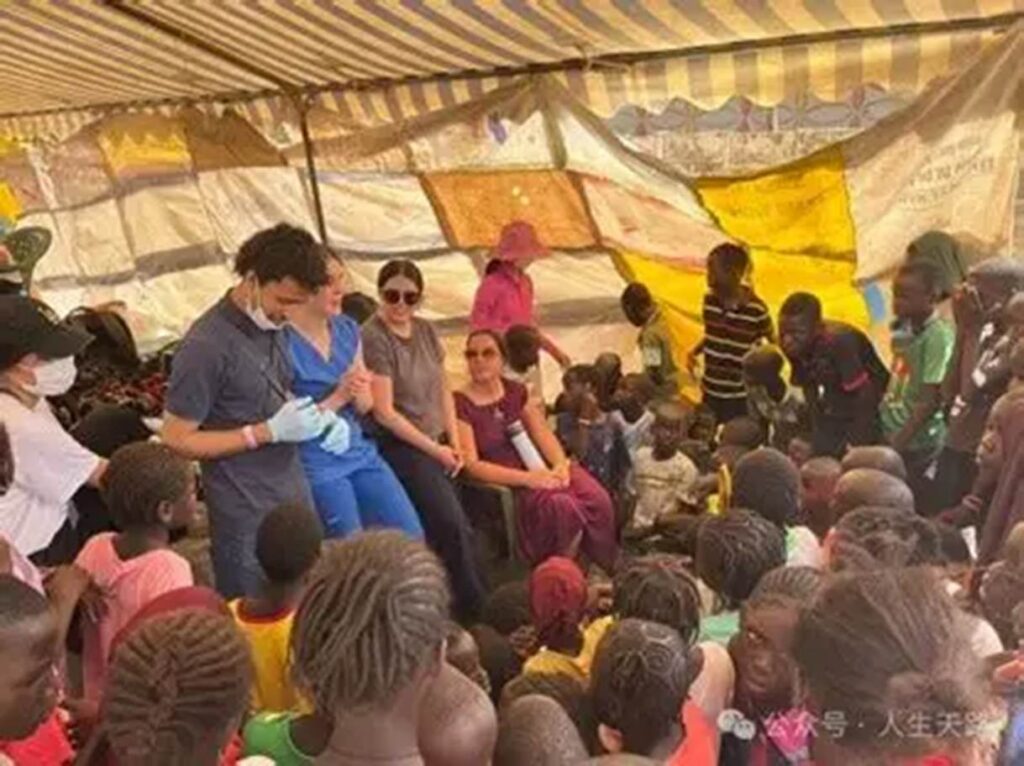
ACO medical outreach in Senegal — youth and volunteers serving in a real community setting.
If a student says, “I want to become a doctor,” what do they need beyond classes, tests, and research?
Sometimes they need to step into a real community, see how physicians care for real patients, understand what healthcare looks like when resources are limited, and begin asking bigger questions: Why do some communities lack basic care? What do people truly need? What can we do? And how can a good service project become sustainable?
What Will Students Experience?
1. Real Clinical Environment Exposure
Students will accompany physicians and healthcare teams in real outreach settings. Under professional supervision, and depending on age, maturity, local rules, and site conditions, they may participate in age-appropriate learning and service activities.
- Patient intake and clinic flow
- Basic physician-patient communication
- Introduction to history taking
- Vital signs and basic clinical concepts
- Common conditions and medication principles
- Triage and team-based care
- Medication and medical-supply organization
- Health education and community outreach
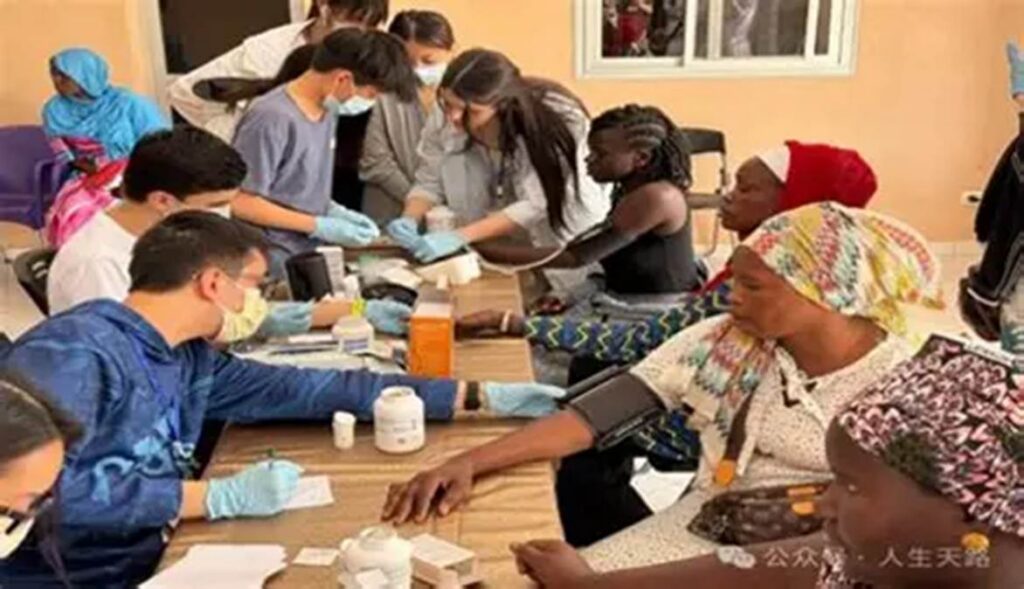
Students observing and assisting with age-appropriate tasks during a community medical program.
| The goal is not to let students “play doctor.” The goal is to help them begin to understand how medicine serves a real person. For students interested in medicine, nursing, public health, biomedical science, or other health professions, this kind of experience can offer much more depth than observation alone. |
2. Learn Foundational Medical Concepts
Before departure and during the program, the program will provide age-appropriate medical learning. The emphasis is not memorization, but connecting medical knowledge to real problems.
- History taking — Why does a physician ask certain questions?
- Physical examination — What information is the clinician looking for?
- Medication — Why can similar symptoms require different approaches?
- Public health — Why can some health problems not be solved by one doctor alone?
Students will begin to see that health is shaped not only by hospitals, but also by water, nutrition, education, transportation, public health, economics, and access to care.
3. Understand Africa, Community Development, and Global Health
The Senegal program exposes students to a social and healthcare environment very different from a U.S. classroom. We do not want young people to simply “see poverty.” We want them to learn how to understand a community, respect local people, and think carefully about what creates meaningful, long-term impact.
- Local primary care and community health systems
- Why healthcare resources may be limited
- Maternal and child health
- Chronic disease management
- Medication and supply access
- Rural and remote healthcare
- The relationship between education and health
- Sustainable community development
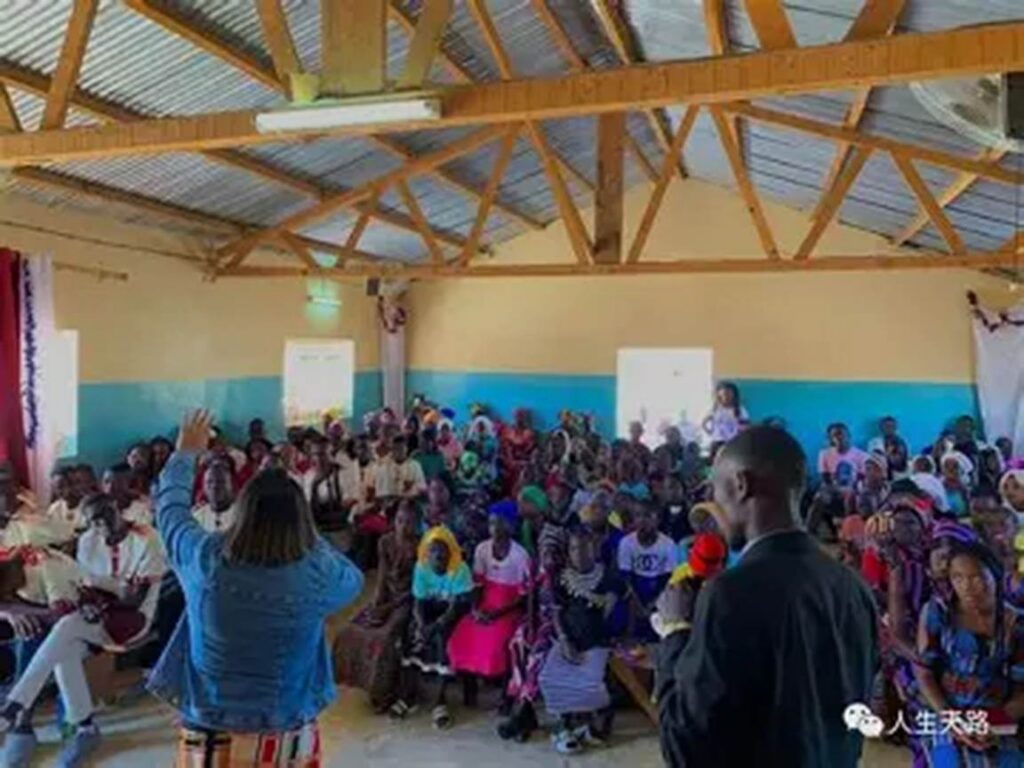
Community gathering in Senegal — an opportunity for students to understand local needs, culture, and development.
4. Participate in Real Project Evaluation and Planning
This is one of the most important parts of the Medicine Connect model. Students are not only participants; they learn to think like a project team.
- What is the problem? — What does the community actually need?
- What do we observe? — What information can we collect on site?
- What can be improved? — What could make an existing project stronger?
- What can we do next? — If students designed a project, what would it look like?
Students may also participate in:
- Community-needs observation
- Project research and documentation
- Basic data collection and analysis
- Program evaluation
- Small-group discussion
- Project proposals
- Post-trip summary and presentation
| Learn → Observe → Serve → Think → Design → Lead We want the Africa experience to become more than a one-week volunteer trip. It can grow into a complete student project—from preparation, to service, to analysis, to future planning. |
5. Learn About ACO’s Long-Term Projects
ACO’s work in Senegal extends far beyond one annual medical mission. Students will have opportunities to learn about several long-term initiatives currently being developed.
- Medical Missions — Ongoing community medical outreach and service.
- Community Health Development — Strengthening primary care, health education, and chronic disease management.
- Youth Medical Training — Helping young people explore medicine and service through structured learning.
- Clinic Development — Building sustainable local points of care.
- Dr. Idrissa Faye Memorial Hospital — Developing a hospital and related healthcare network to support communities over the long term.
- Healthcare Professional Training — Supporting education and training for local physicians, nurses, and other healthcare professionals.
Students can then ask a larger question: If a short-term mission is going to become a sustainable healthcare system, what needs to happen in between?
6. From Participant to Project Contributor
We do not want students to simply travel to Africa, take photos, and receive a certificate. From pre-trip preparation onward, students can participate in the full process.
- Background research
- Team preparation
- Medical and community-service organization
- On-site service
- Community observation
- Program evaluation
- Data organization
- Post-trip reflection and presentation
- Follow-up project planning
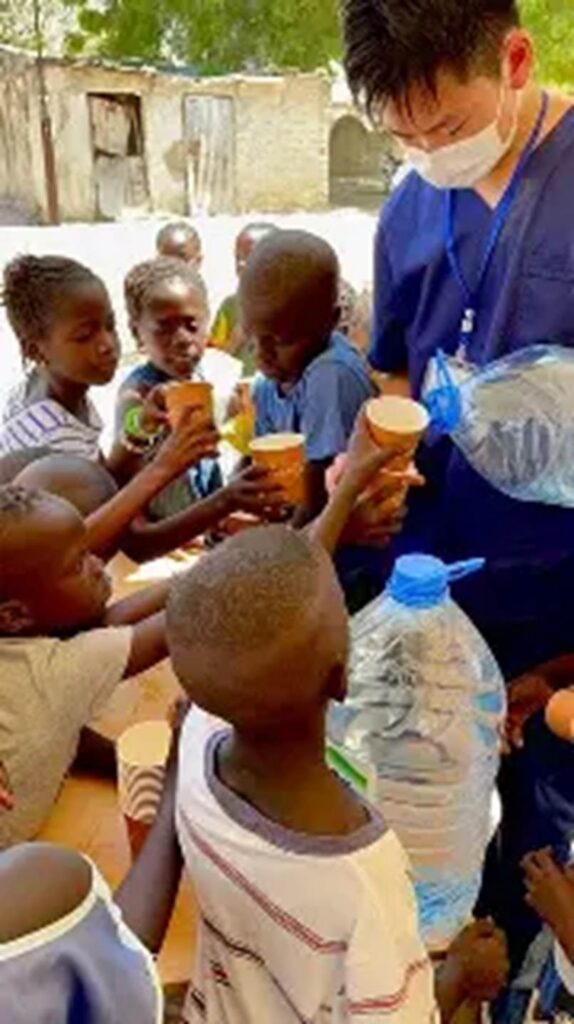
Working directly with local children and families can help students connect medicine with compassion and community.
2027 Reference Travel Schedule
| Group | Departure | Return | Reference Route |
| Group 1 | Thu, Mar 11, 2027 | Fri, Mar 19, 2027 | JFK ↔ Dakar (DSS), Delta |
| Group 2 | Thu, Mar 18, 2027 | Sun, Mar 28, 2027 | JFK ↔ Dakar (DSS), Delta |
Travel note: These flights are for reference only. Participants are responsible for purchasing their own tickets. Flight schedules, prices, baggage policies, and availability may change, so please confirm all details before booking.
| Luggage Coordination Note Please plan to reserve at least one checked-baggage allowance or equivalent luggage space so ACO can transport approved medicines and medical supplies to Senegal. Participants do not need to pack these supplies themselves; ACO will organize them in large duffel bags. |
Who Is This Program For?
- High school students interested in medicine
- Students considering medical school or other health professions
- Students interested in public health or global health
- Young people interested in Africa and international service
- Students who want to participate in real-world nonprofit projects
- Students seeking leadership, teamwork, and social-responsibility experiences
Safety and participation principle: Specific student activities will be adjusted based on age, maturity, local regulations, site conditions, and professional supervision. Medical-related participation will remain educational, observational, and age-appropriate.
This Could Be a Different Kind of Growth Experience
A student can learn a great deal of medicine in a classroom. But by entering a real community and facing real human needs, they may begin to understand why they want to study medicine, why society needs healthcare professionals, and why professional skill should be connected with responsibility and compassion.
| We hope students bring home more than photos and certificates. We hope they return with a bigger world, deeper understanding, clearer direction, and a meaningful project of their own. |
About Medicine Connect
Medicine Connect (MC) is a youth and volunteer platform that connects healthcare professionals, students, and communities through medical education, service, mentoring, and real-world project experiences.
MC helps young people move beyond passive observation. Through physician-led learning, community service, global health experiences, project development, and mentorship, students are encouraged to explore medicine while developing compassion, teamwork, leadership, and a sense of responsibility.
CONNECT MEDICINE • SERVE COMMUNITIES • DEVELOP THE NEXT GENERATION
REGISTER
| 2027 ACO Senegal Program Registration Is Now Open Program details and ACO information: africacriesout.org See the world. Learn medicine. Serve others. Build something meaningful. |